Region selection not available within checkout process
TR11 Alloy
YEARS PRODUCED: 2026
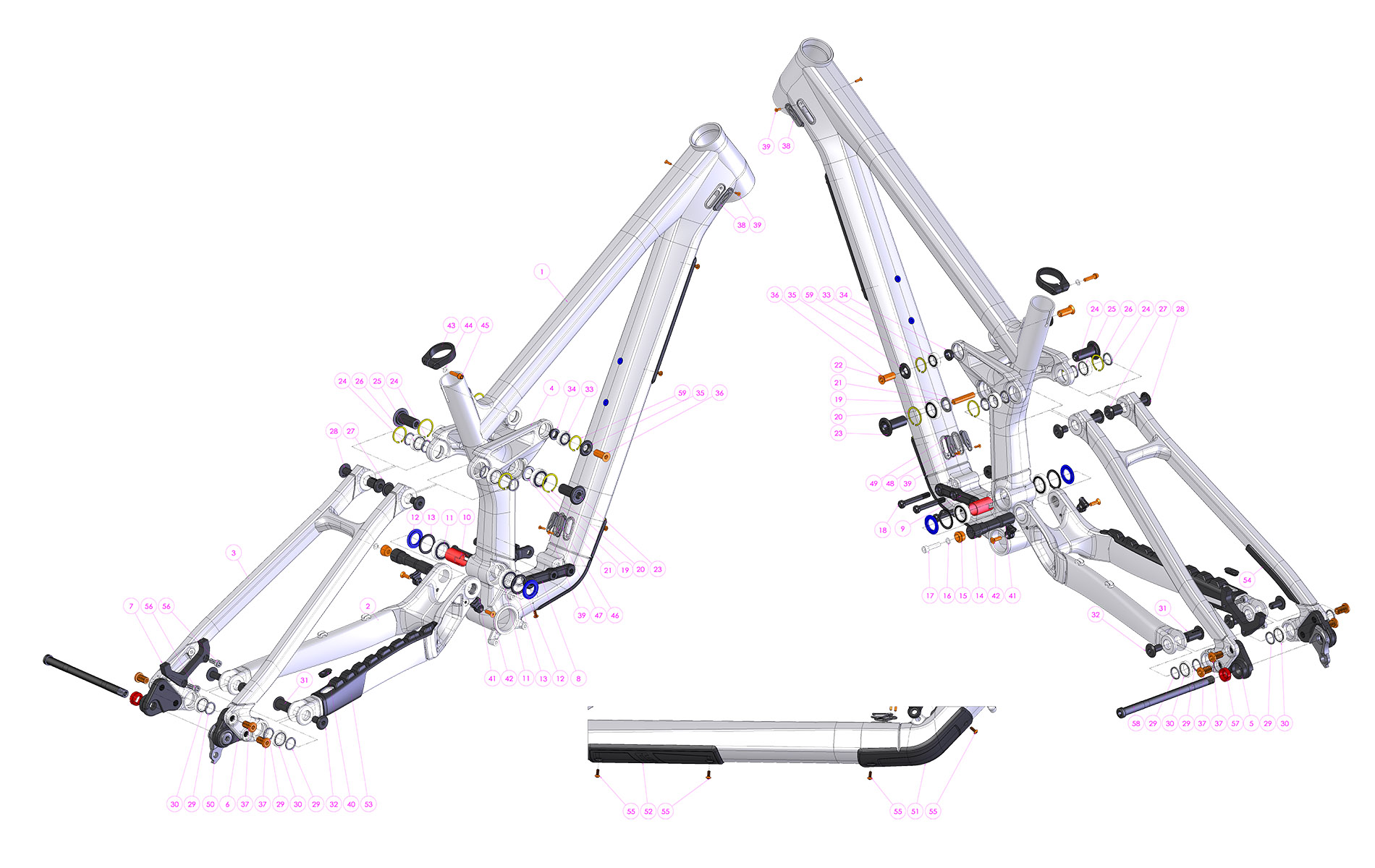
You may view the exploded frame detail and purchase replacement parts for your frame below. To verify you have the correct frame, please make sure your serial number has the same first 7 characters listed below.
APPLICABLE SERIAL NUMBER RANGES: TBC4810xxx, TBC4811xxx, TBC4814xxx,
Item Added To Your Cart
REF #
DESCRIPTION PART # Torque Specs Other Notes
# IN FRAME
STOCK LEVEL
PURCHASE QTY
ADD TO CART
PRICE/EA
0
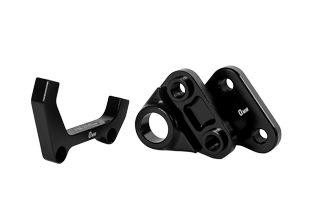
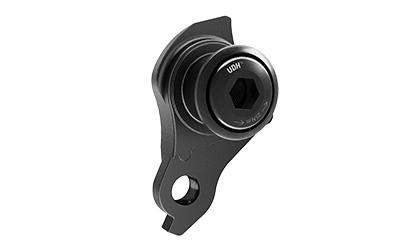
SALSA Dropout Kit (0mm) - Includes 200mm Post Mount Adapter P/N: 01.25.98.9001
1
All Available
$125.00
0
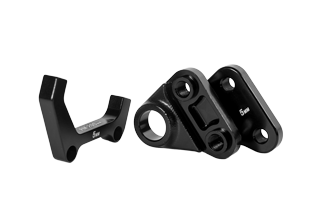
SALSA Dropout Kit (5mm) - Includes 200mm Post Mount Adapter P/N: 01.25.98.9003
1
Out of Stock
$125.00
0
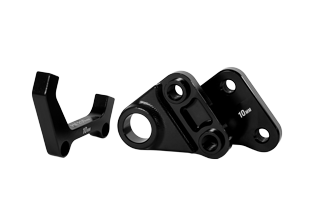
SALSA Dropout Kit (10mm) - Includes 200mm Post Mount Adapter P/N: 01.25.98.9005
1
All Available
$125.00
0
SALSA Dropout Kit (15mm) - Includes 200mm Post Mount Adapter P/N: 01.25.98.9007
1
All Available
$125.00
1
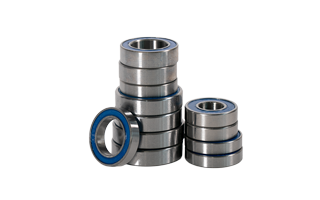
Frame Bearing Kit: Trunnion A - Includes All Bearings P/N: 01.25.91.0001
1
All Available
$60.00
8
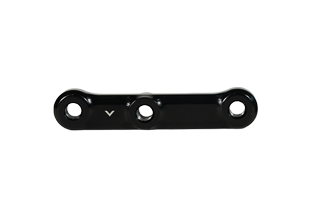
CHIPS Lower Shock Mount (Threaded Side) P/N: 01.25.92.1105
1
All Available
$25.00
9
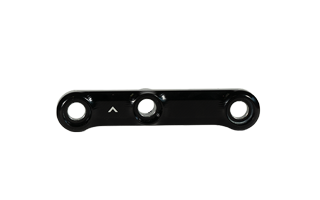
CHIPS Lower Shock Mount (Non-Threaded Side) P/N: 01.25.92.1104
1
All Available
$25.00
10
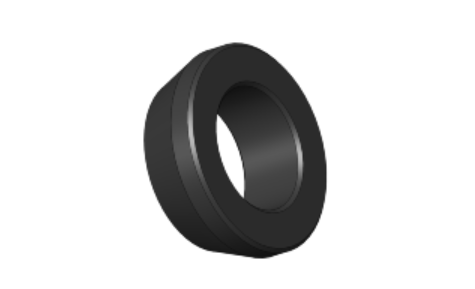
Main Pivot Spacer 17mm x 32mm (TRB-BSP-32L) P/N: 01.25.92.1108
1
All Available
$6.00
11
Bearing: (6903) - Each P/N: 008.25947
2
All Available
$11.00
12
Main Pivot Bearing Spacer 17x30x3.5 (TR10-SPA) P/N: 01.25.92.1107
2
All Available
$6.00
13
Main Pivot Bearing Seal 23x30x1.5 (TR10-SPA-SL) P/N: 01.25.92.1106
Misc Notes - (Apply Grease to Rubber Seal)
2
All Available
$5.00
14
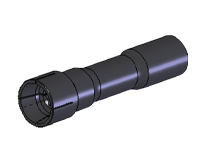
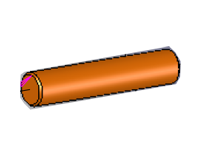
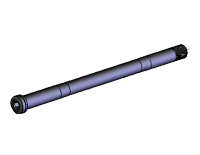
Main Pivot Axle 17mm x 80mm (TRB-MAX-80L) - Each P/N: 01.22.92.0201
Torque Spec - 19nm (Apply Grease To Shaft & Blue Threadlock To Threads)
1
All Available
$18.00
15
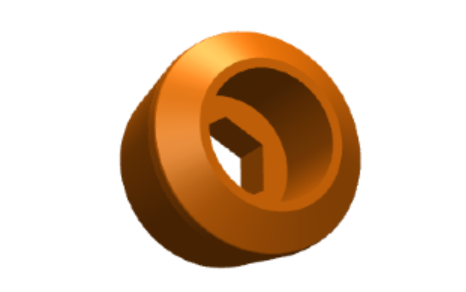
Main Pivot Taper Nut (A6DA-CCP) - Each P/N: 01.18.92.0205
Misc Notes - Apply Grease To Outer Surface
1
All Available
$6.00
16
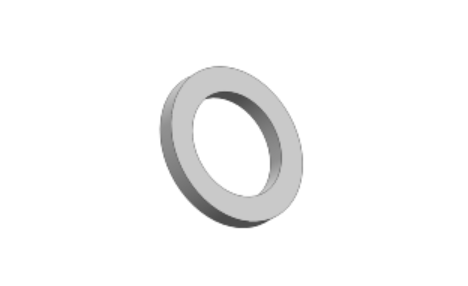
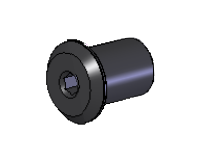
Main Pivot Spacer (6x10x1T) - Each P/N: 01.18.92.0203
1
All Available
$0.50
17
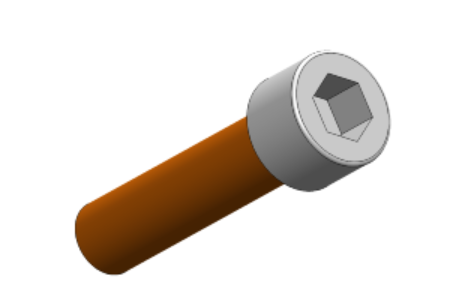
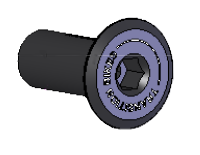
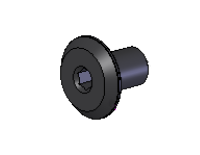
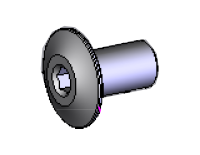
Main Pivot Screw (M6-25L-P-S) - Each P/N: 01.18.92.0202
Torque Spec - 10nm (Apply Blue Threadlock)
1
All Available
$1.50
18
Shock Bolt 8mm x 52mm (TRBR-BT-52L) P/N: 01.25.92.1109
Torque Spec - 10nm (Apply Grease To Shaft & Threads)
3
Only 2 Available
$10.00
19
Bearing: (6902) - Each P/N: 008.25949
2
All Available
$11.00
20
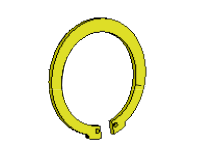
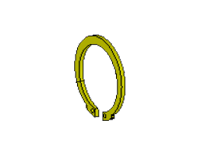
C-Clip 28mm (IRTW-28) - Each P/N: 01.20.92.0002
2
All Available
$2.00
21
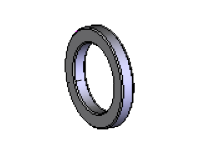
Bearing Spacer 15mm x 22mm x 3mm (TEDC-BWS) - Each P/N: 01.18.92.0004
2
All Available
$3.00
22
Rocker Pivot Screw 8mm x 40mm (MDEA-LBT) - Each P/N: 01.19.92.0303
Misc Notes - (Apply Blue Threadlock)
1
All Available
$1.50
23
Rocker Pivot Axle 15mm x 38mm (TSCF-LAX) - Each P/N: 01.20.92.0301
Torque Spec - 15nm (Apply Grease To Shaft)
2
All Available
$10.00
24
Bearing Spacer 15mm x 19mm x 2.5mm (TSFA-LWS) - Each P/N: 01.18.92.0003
4
All Available
$3.00
25
Bearing: (3802) - Each P/N: 008.25951
2
All Available
$11.00
26
C-Clip 24mm (IRTW-24) - Each P/N: 01.20.92.0001
2
All Available
$2.00
27
Seatstay Pivot Axle 15mm x 20mm (TRB-CAX-20L) - Each P/N: 01.20.92.0402
Misc Notes - (Apply Grease To Shaft)
2
All Available
$10.00
28
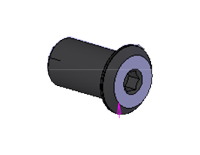
Seatstay Pivot Screw 12mm x 12mm (TRB-SNT-12L) - Each P/N: 01.20.92.0401
Torque Spec - 12nm (Apply Blue Threadlock)
2
All Available
$10.00
29
Bearing Spacer 15mm x 19mm x 2mm (ASEE-LWS) - Each P/N: 01.18.92.0002
6
All Available
$3.00
30
Bearing: (6802) - Each P/N: 008.25948
4
All Available
$11.00
31
Chainstay Pivot Axle 15mm x 26mm V2 (TRB-CAX-26L) - Each P/N: 01.19.92.0101
Misc Notes - (Apply Grease To Shaft)
2
All Available
$10.00
32
Chainstay Pivot Screw 12mm x 15mm V2 (TRB-SNT-15L) - Each P/N: 01.19.92.0102
Torque Spec - 10nm (Apply Blue Threadlock)
2
All Available
$10.00
33
Bearing: (6900) - Each P/N: 008.25950
2
All Available
$11.00
34
Trunnion Shock Spacer 10mm x 6mm (TSC-SWS) - Each P/N: 01.18.92.0005
2
All Available
$2.50
35
Trunnion Shock Bolt Washer V2 (TSCF-SCP) - Each P/N: 01.19.92.0508
2
All Available
$5.00
36
Trunnion Shock Bolt V2 10mm x 24mm (TSC-TRC-24L) - Each P/N: 01.19.92.0506
At Transition Bikes, we take pride in building products designed to handle the ever-increasing demands of modern mountain biking. From the world-renowned terrain right in our PNW backyard, to the sport's biggest stages across the globe, our bikes are meant to be ridden hard by riders pushing the limits of what a mountain bike can do.
The mission of our Rider Support Team is simple: Keep our riders riding when things go sideways. Transition Bikes offers real, human support via phone, live chats, and email between the hours of 9am and 5pm PST, Monday through Friday.
Whether you're the original owner, purchased your Transition secondhand, or picked one up from your local dealer's demo fleet, we are committed to finding you a fair and timely solution.
UNLIMITED RIDER SUPPORT
ALL Transition frames are covered by our Unlimited Rider Support program. This program keeps you riding by providing discounted replacement frame parts or repair assistance in the event of damage - regardless of how it happened, or whether you're the original or a secondhand owner. If we are unable to replace or repair your frame part, we will work with you to find a suitable solution.
LIFETIME WARRANTY
The TR11 Alloy, released in 2026, is covered for life against manufacturing defects. This policy applies to original owners only. Lifetime Warranty covers defects in materials and workmanship for the useful life of the product. Riders must register their product on our site by providing the serial number and proof of purchase.
Our lifetime warranty does not cover normal wear-and-tear, failures caused by lack of maintenance, cosmetic damage including paint aging or fading, paint damage caused by the installation or removal of frame protection or adhesives, modifications from the original configuration, or labor costs associated with warranty repairs or replacements.
In the event of an issue with your frame, Transition Bikes will determine whether it qualifies as a ‘Warranty Issue’ or is covered under our ‘Unlimited Rider Support’ (see below for details).
In the event that you have to send back all or part of your frame under warranty, you are responsible for the shipping costs to get it to us, and we will pay the return shipping.
WE GET IT, PEOPLE WHO RIDE OUR BIKES RIDE HARD
Above is our official stance, since to some degree these things need to be spelled out. Our entire philosophy is based around being a rider-owned company, and we take that seriously. We're well aware that not every circumstance can be accounted for and not every case falls neatly into one of the above categories. We look at every warranty and rider support case with a fresh lens, and treat every situation in the manner in which we would expect it to be handled. Our goal is to leave no rider who supports us without support in return.
*We strive for consistency, and our aim is to provide identical, color-matching replacement parts wherever possible. Depending on availability, variations in paint batches, and paint fading slightly with age, a replacement part may come in a slightly different shade, or in some cases, a different color altogether. These differences are cosmetic only, and do not affect the performance of your bike.
WARRANTY/RIDER SUPPORT CLAIM FORM
To submit a Warranty/Rider Support Claim within the United States or Canada, you must have an account with us. To sign in to your existing account or create a new account, follow this link. Once you are signed in, click on Warranty Claims to submit a claim.
Our International Distributors handle warranty cases outside the United States and Canada. Please contact your region's distributor to get a claim started.
If you have any other questions regarding our warranty or rider support policies, please email us at warranty@transitionbikes.com or call us by phone, at (360) 230-8596.
Can I remove or substitute any parts when I buy a frame or complete bike?
We are not able to remove, substitute or modify any parts included with a frame or complete bike. All parts specified will be included with your purchase.
Can I run the TR11 with dual 27.5 wheels?
Yes, with dual 27.5 wheels your head angle will be a little bit steeper and your bottom bracket will be a little bit lower. In order to minimize the changes, we would recommend using a 29 fork. If you are converting a complete bike, all you would need is a different front wheel and tire.
Can I try a bike before I buy?
We offer three ways to demo a bike. If you find yourself in Bellingham, you can follow this link to schedule a demo through the Outpost. If you live somewhere else, you can follow this link to see what shops currently have demo bikes available. And finally, you can view our events page, located here to see which upcoming demo events we'll be participating in.
Do you offer financing?
We provide easy and affordable financing through our partner, Bread, so you can pay for your purchase over time. This option is only available in the USA at this time.
How do I get warranty support / order support parts outside of North America?
You'll need to contact your nearest dealer or distributor - they can be found on our dealer map
How do I orientate my shock when adjusting my C.H.I.P.S?
When adjusting the position of the lower shock mount using the C.H.I.P.S. system. It is important the rebound knob has as much clearance as possible. Please refer to the image to see correct orientation.
It is also important that the airvalve on airshocks faces forward. To do this, simply let all the air out of your shock and spin the aircan forwards. A strap wrench can aid in this process.
Please refer to the image to see correct orientation.
I want to run a coil shock, do you have a spring rate recommendation?
We do not have a spring rate chart or recommendation for this model. Please reach out to the shock manufacturer or use the spring rate calculator at TF Tuned which may be found here tftuned.com.
What do the indicator marks on the C.H.I.P.S. tell me?
What is the maximum rear tire size?
We list a guideline tire size for each frame, but the real answer is: it depends. Tire brand, tread pattern, rim width, conditions, and how aggressively you ride all play a role. Wider rims can make tires measure larger, and there’s variability between sizes and manufacturers (not all 29” x 2.4” tires are created equal).
If you ride in mud, you'll need extra clearance to avoid packing up. If you push the bike hard, you could flex the rear wheel enough to cause tire rub on the rear triangle—even if you think you’ve got plenty of clearance.
So, what's the takeaway? Please use common sense. If your wheel is properly dished, trued, and tensioned and your tire is rubbing hard enough to damage the frame, you’re probably running too big of a tire.
THIS WEBSITE USES COOKIES
We use cookies to personalize content, to provide social media functionality, and to better understand our users. We also share information about your use of transitionbikes.com with our social media, advertising, and analytics partners who may aggregate it with other information that you've provided to them or that they've collected from you during your use of their services. You may read our cookie policy here.













 Croatia (€)
 Cyprus (€)
 Czech Republic (€)
 Denmark (€)
 Estonia (€)
 Finland (€)
 France (€)
 Germany (€)
 Greece (€)
 Hungary (€)
 Ireland (€)
 Italy (€)
 Latvia (€)
 Lithuania (€)
 Luxembourg (€)
 Malta (€)
 Poland (€)
 Portugal (€)
 Romania (€)
 Slovakia (€)
 Slovenia (€)
 Spain (€)
 Sweden (€)
 Switzerland (CHF)
 United Kingdom (£)
 Austria (€)
 Belgium (€)
 Bulgaria (€)
 Canada ($)
 Other ($)